 Request Appt

 281 Cambridge St. Burlington, MA 01803
 (781) 272-5890
Tooth Extractions – Burlington, MA
Alleviating Oral Complications by Removing Problem Teeth

It’s normal for people to want to keep as many of their natural teeth as possible. However, there are some cases where it isn’t viable to keep a tooth, especially if it’s placing the rest of your smile at risk of damage, decay, or infection. If a tooth is compromised beyond repair, our team can perform tooth extractions in Burlington as a last resort to effectively preserve your oral health. Read on to learn more about this treatment or call our office today to schedule an appointment.
Why Choose Derek Song, DMD for Tooth Extractions?
- Offers Wisdom Tooth Extractions
- In-House Specialists Available for Effective Treatment
- Accepts Insurance & Provides Membership Plans
Reasons Why Tooth Extractions Are Necessary

Our team will do everything we can to preserve as many natural pearly whites as possible. However, sometimes this isn’t always the best solution for keeping the rest of your smile safe and healthy. In many instances, removing the problem tooth can help avoid future infections and other complications. Here are several cases when a tooth extraction might be required to restore your overall dental health:
- There’s serious decay or damage to the tooth that’s beyond repair.
- A tooth is impacted and won’t erupt properly.
- To allow a patient to undergo an orthodontic process.
- To boost the success of a long-term restoration, such as a denture.
- A primary tooth that won’t fall out by itself.
The Process of Removing a Tooth
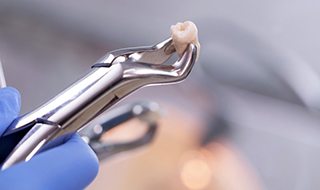
Teeth are typically extracted via simple pulling or surgical removal. In the first case, we can only “pull” pearly whites if they’ve already emerged from underneath the gumline. To begin the process, we’ll first numb the area with a local anesthetic before using a clasping tool to shift the tooth around until it’s extracted. If this isn’t possible, we’ll need to make a small incision in the gum tissue so we can reach the entire structure of the tooth to remove it.
Our team will determine the appropriate extraction method by evaluating your situation and X-rays. We’ll also review your tooth replacement options after your extraction procedure, as we’ll want to prevent future oral health problems that can come from tooth loss. These options can usually involve dental bridges, dentures, or dental implants.
Tooth Extraction Aftercare

Before and after your procedure, our team will provide you with detailed aftercare instructions to help make your recovery smoother and more comfortable. While every patient is unique, some of the common steps include:
- Rinsing with saltwater a day after your appointment
- Elevating your head when resting
- Getting plenty of sleep
- Avoiding tobacco products
- Taking over-the-counter/prescribed medications as instructed
- Applying an ice pack to minimize swelling and pain
- Avoiding hard, sticky, crunchy, and spicy foods
Understanding the Cost of Tooth Extractions

A tooth extraction may be the best way to end miserable dental pain, preserve your oral health, and prevent future infections, but it’s still perfectly reasonable to ask how much the procedure will cost after your dentist recommends it. Since every case is different, we cannot provide you with a proper cost estimate until we have evaluated your situation at our office, but this guide can help you get a better idea of what to expect. Here’s a quick look at how tooth extractions are priced at Dr. Song’s office.
Factors That Can Affect Tooth Extraction Cost

Several factors will probably determine most of the cost of your tooth extraction. These include:
- The type of tooth being removed: The teeth that are located farther back in the mouth are larger and harder to reach and have more complex anatomy, which usually makes them more costly to extract.
- The number of teeth being extracted: Each tooth removed will be noted individually on your bill.
- The complexity of the case: In some especially complicated cases, we may have to refer a patient to a specialist who uses a different pricing structure.
- Restoration: The American Dental Association recommends replacing lost teeth as soon as possible. Dr. Song offers high-quality tooth replacements such as bridges, dentures, and implants.
Does Dental Insurance Cover Tooth Extractions?

Dental insurance plans often cover major restorative procedures like tooth extractions by about 50%, but this rate can vary considerably between policies. In many cases, an insurance policy will impose restrictions such as a waiting period or a deductible that must be met before benefits take effect. During your consultation, our staff will be happy to help you navigate your insurance plan and determine what it will pay for.
How to Make Tooth Extractions Affordable

We understand that some people who need tooth extractions may need a little help making the treatment affordable, and we want to make sure everyone in Burlington can receive the necessary oral health care they deserve. For $500 a year, you can benefit from our in-house membership plan that includes all routine oral care, two emergency visits, and 15% off all other procedures.
Tooth Extractions FAQs
Does getting a tooth extracted hurt?
This is a popular question, especially among patients who struggle with dental-related anxiety. If that’s the case for you, we have good news: the first step of the procedure is always to numb your mouth thoroughly. That way, you can relax comfortably in the treatment chair while we work to remove your tooth.
Tip: If you feel any nerves, stress, or worry leading up to your appointment, ask us about nitrous oxide! Commonly known as “laughing gas,” this mild sedative can help you relax so you have the positive experience you deserve while caring for your smile.
How should I prepare for my tooth extraction?
There are a few steps we recommend taking prior to your tooth extraction to help make the overall process smooth and stress-free. To start, you should arrange for an adult that you know and trust to drive you to and from your appointment if you’re being sedated. You should also grab anything you need for the recovery period from the store, like soft foods and OTC pain medication. Finally, you should steer clear of all tobacco products, get a good night’s sleep the night before, and choose something comfortable to wear the morning of your appointment.
What can I do to speed up the healing time?
If you have a lot going on at work, you’re a busy parent, or you have a big project at school, you might be antsy to get back to your usual routine. However, it’s crucial that you follow the aftercare instructions that we provide, including getting plenty of rest. If you don’t, then several issues can arise, including a dry socket.
How soon can I eat after my tooth extraction?
To prevent a serious soft tissue injury, you need to wait until you’ve regained full sensation in your mouth, which usually takes an hour or two. In the 24 hours following your tooth extraction in Burlington, you need to stick to a liquid diet (without using a straw). After that, you can progress to extremely soft foods, like plain yogurt, applesauce, and pudding. If you choose to eat something warm, like mashed potatoes, allow ample time for it to cool down.
Can I leave the space empty after a tooth extraction?
It’s possible! For instance, if we performed an extraction so we could make room in your mouth prior to orthodontic treatment, then the space should be left empty. If we performed an extraction because the tooth in question was badly decayed or damaged, however, then that’s a different story. In that case, we will need to fill the newly open space with a dental bridge or implant to ensure the appearance of your smile and the strength of your bite aren’t compromised moving forward.