
 281 Cambridge St. Burlington, MA 01803
 (781) 272-5890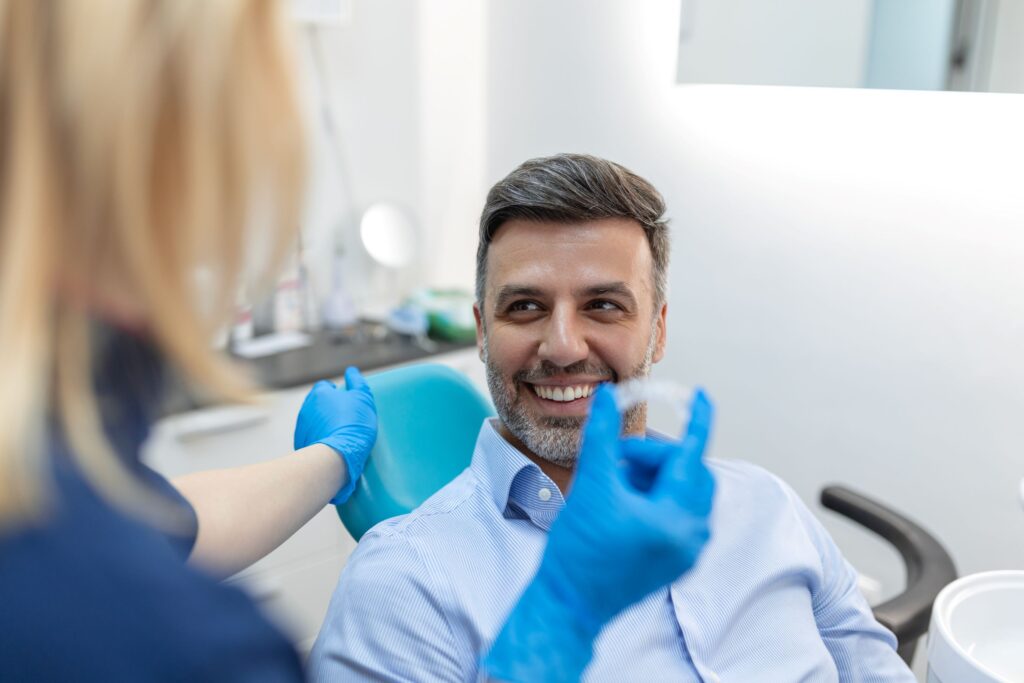
Although braces are the tried-and-true solution for straightening smiles, many patients prefer to avoid the hassle and discomfort of having metal brackets attached to their teeth for months or years.
Fortunately, many dentists offer Invisalign, which is considered a more discreet and less invasive alternative to traditional orthodontics. But if you have a bite misalignment, you might wonder whether this service can successfully address your concerns. Continue reading to learn more about it!
What are Malocclusions?
Have you noticed that your upper and lower teeth don’t seem to touch together correctly when you bite down? If so, you might have a bite misalignment, also referred to as a malocclusion.
Some common variations include:
- Overbite. It’s normal for your upper arch to rest over your lower one, but if your teeth extend too far, they can be worn down unevenly, which can cause cavities or injuries.
- Underbite. If your bottom teeth extend farther than the upper ones, you might develop TMJ concerns, speech impediments, or other oral concerns.
- Crossbite. Teeth that overlap in some areas but not in others can cause uneven jaw growth, challenges eating and speaking, and jaw pain, headaches, or other issues.
How Does Invisalign Work?
Although traditional orthodontics is a standard solution for treating malocclusions, many people are intimidated by the thought of the metal brackets being bonded to their teeth.
Those seeking a more comfortable and convenient treatment might benefit from choosing Invisalign instead. This service uses transparent plastic trays that fit snugly over your arches to apply consistent, gentle pressure that shifts your teeth to their ideal positions. Then, to keep them from reverting to their starting places, you must wear the aligners for 20 to 22 hours daily. Then, after about a week or two, you’ll switch to the next set of trays in your series to account for the ongoing motion of your smile.
Can Invisalign Adjust Bite Misalignments?
Treating your malocclusion can improve your oral health and enhance your appearance. However, it’s natural to wonder whether the plastic trays of Invisalign can exert enough force to treat your condition effectively.
Thankfully, there’s a chance that your dentist can address your concerns with Invisalign, though they may need to include additional accessories in your treatment plan. For example, sometimes, “buttons” made of tooth-colored or transparent composite resin are bonded to your enamel to serve as additional anchors. These are often used in conjunction with bands or other attachments to help the plastic trays shift your jawbone to its ideal position and correct the problem.
But if your malocclusion is more severe, there’s a chance your provider might still recommend traditional braces. If you’re unsure whether you’re a good candidate for Invisalign, you can find out by consulting your dentist directly!
About the Practice
Patients with Derek Song, DMD, benefit from a team of dentists eager to help families in Burlington build and maintain beautiful, healthy smiles. Dr. Song, Dr. Dempsey, and Dr. Tang are each highly accomplished providers who collaborate to offer a comprehensive menu of services for people of all ages, including Invisalign. If you’re curious whether this treatment can address your malocclusion, you can request a consultation on the website or call (781) 272-5890.